SPATIAL EXPERIENCE design & consulting
The Shop At The Broad redesign 2025
THE Story
THE BROAD, Los Angeles, CA, opened to the public in 2015 and quickly became one of the most prominent contemporary art museums in the world.
THE SHOP AT THE BROAD is the retail space adjacent to the exhibition area on the ground floor of the museum.
The original space was working, yet after eight years of being open to the public, the wear and tear had set in and the need for improvements had become clear. There was an opportunity for The Shop At The Broad to not only fix what was broken and refresh the look, but to also improve sales metrics by creating greater operational efficiency, by evolving the shop environment into something that felt familiar yet easier and more streamlined for both the customers and the sales associates.
PROBLEM AREAS DISCOVERED THROUGH CONSULTATION
• lighting
• low storage capacity on sales floor
• need for additional display capabilities
• issues with durability and maintenance
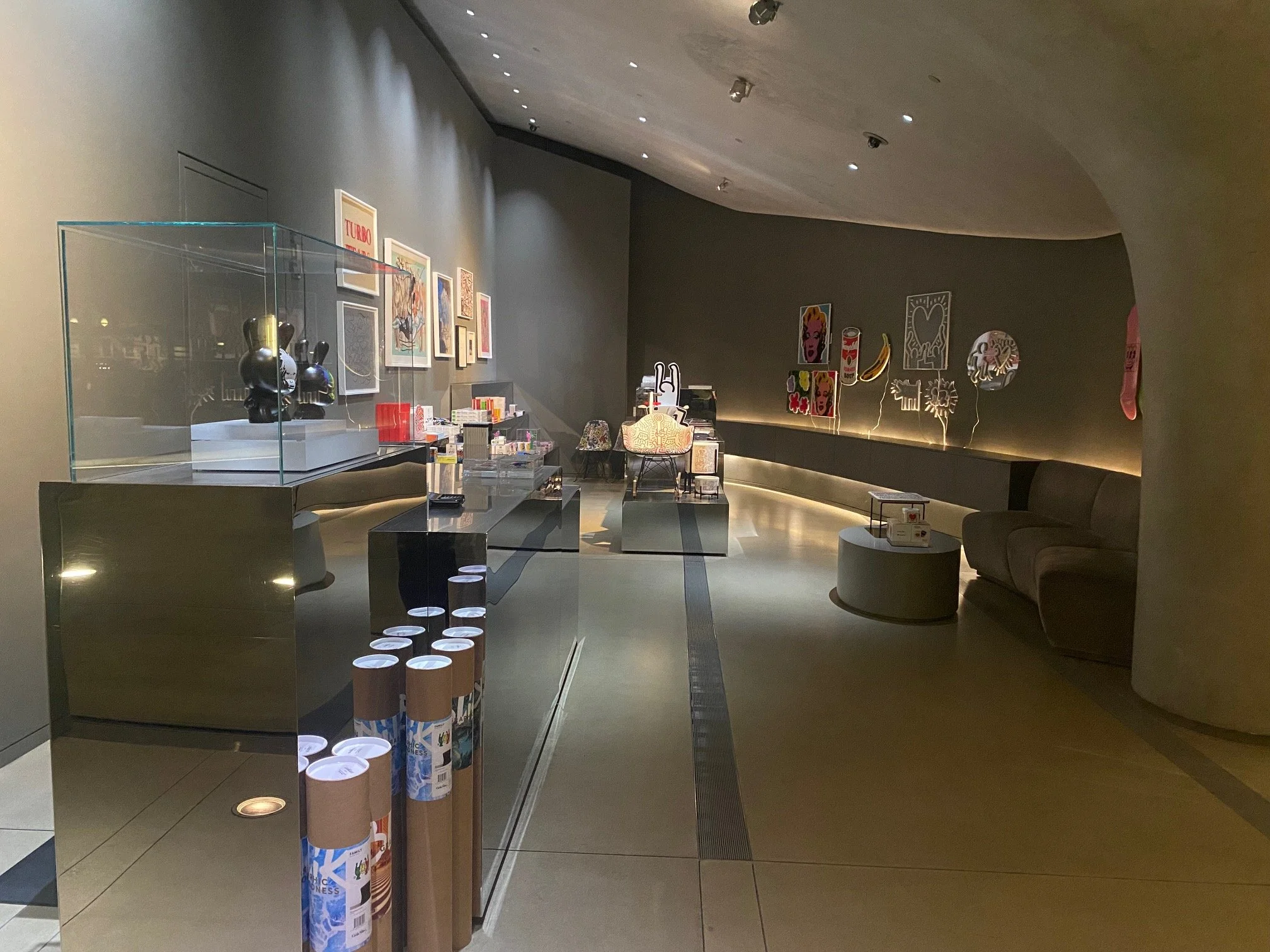
back gallery before redesign
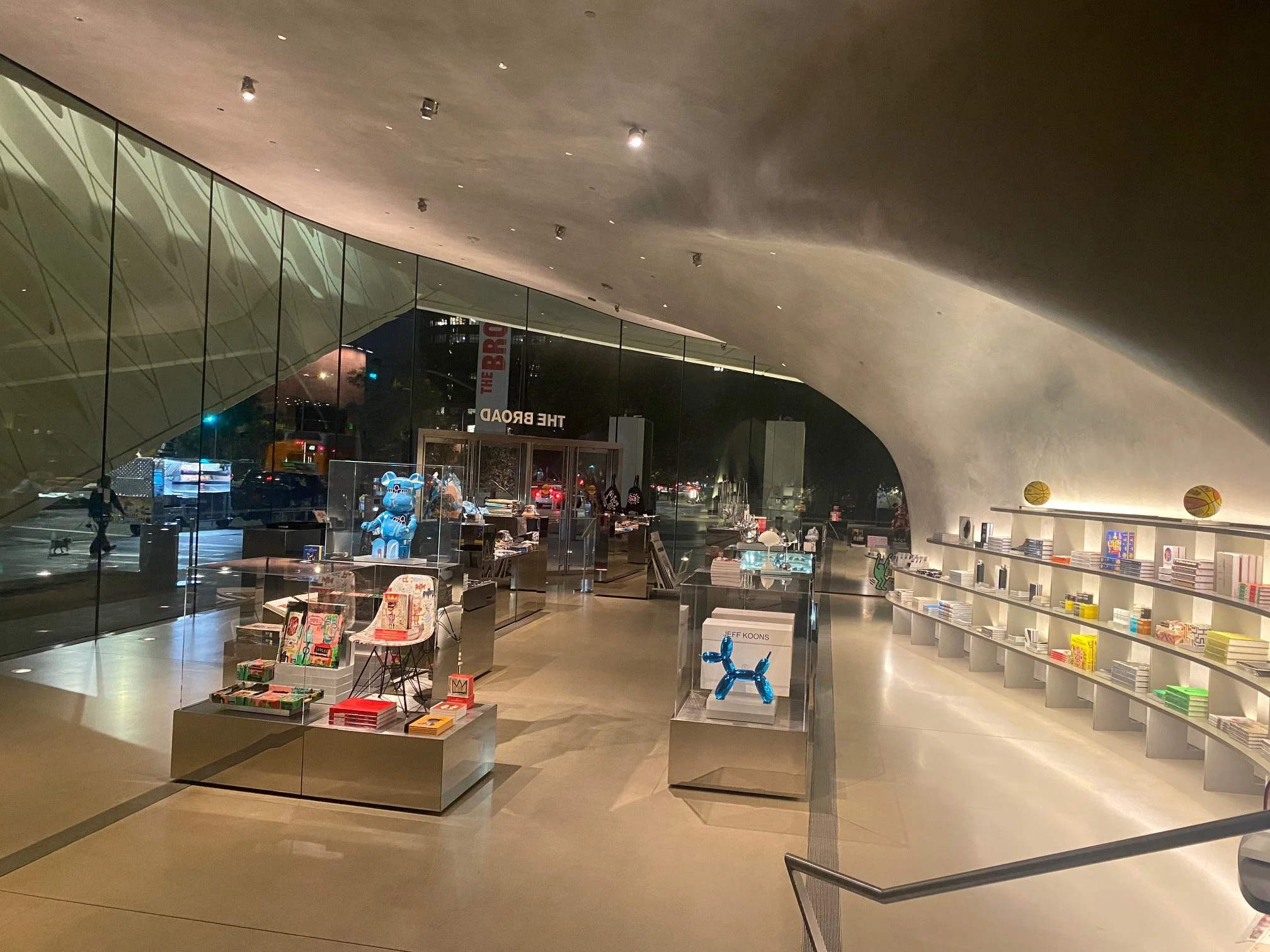
lobby area before redesign
problem 1: lighting
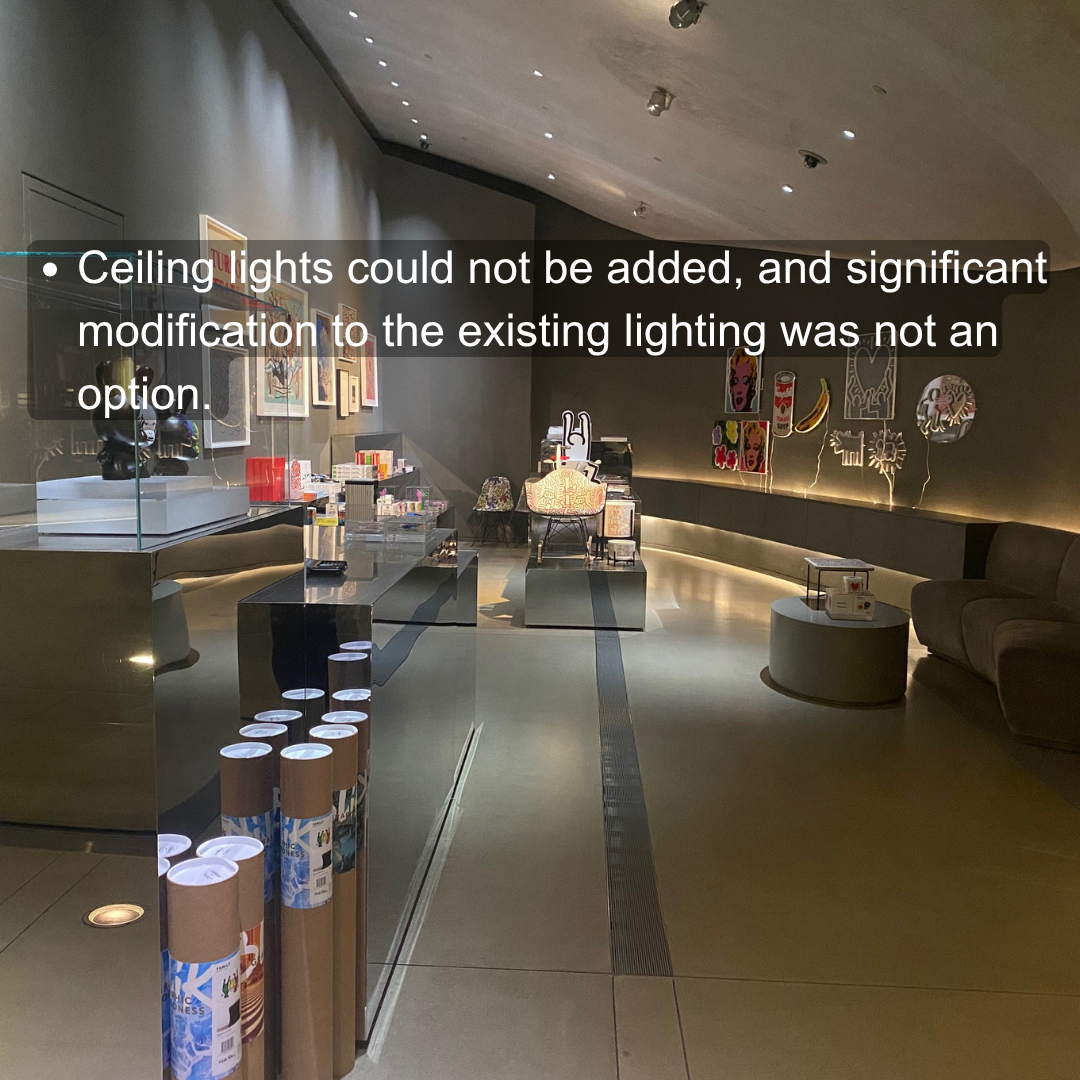
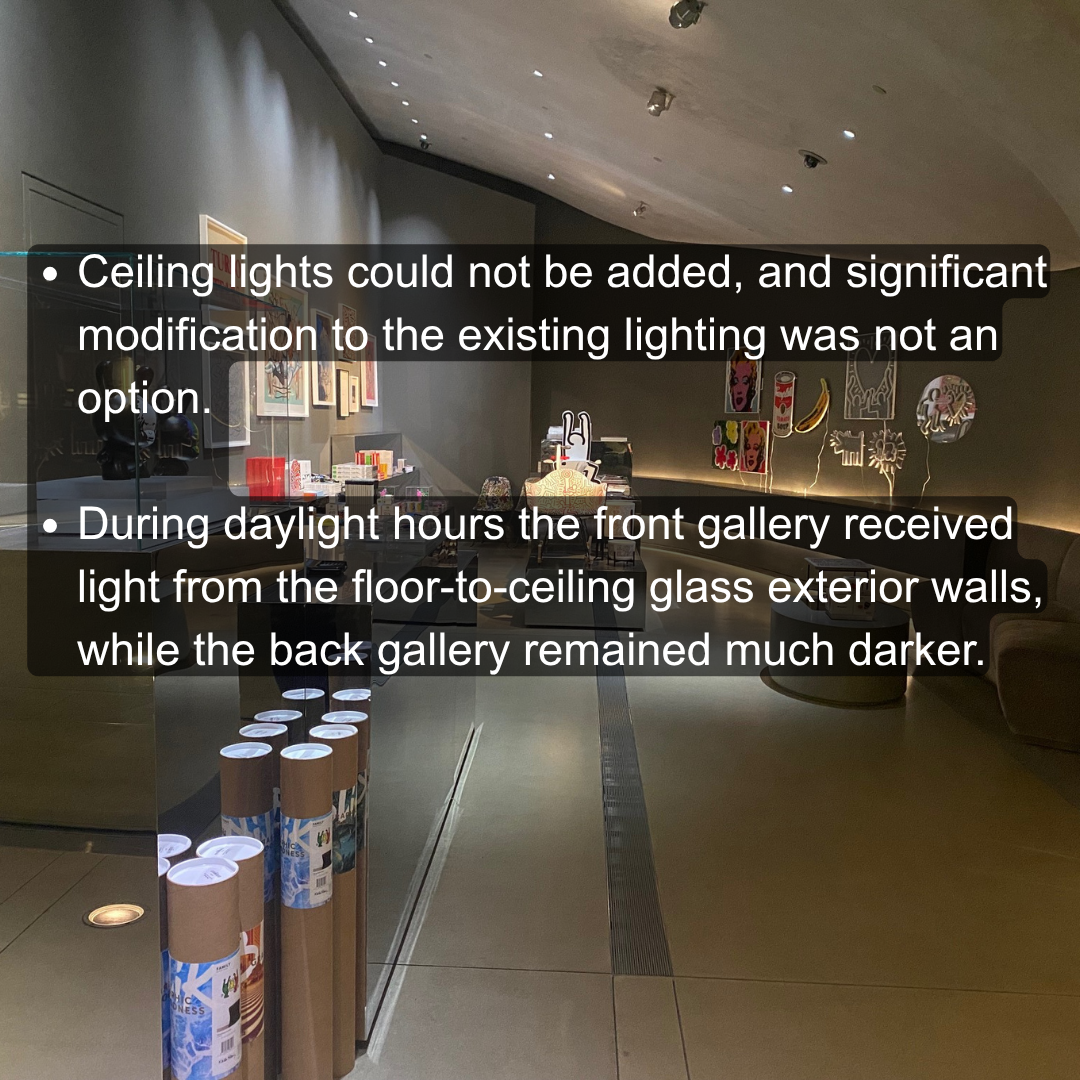
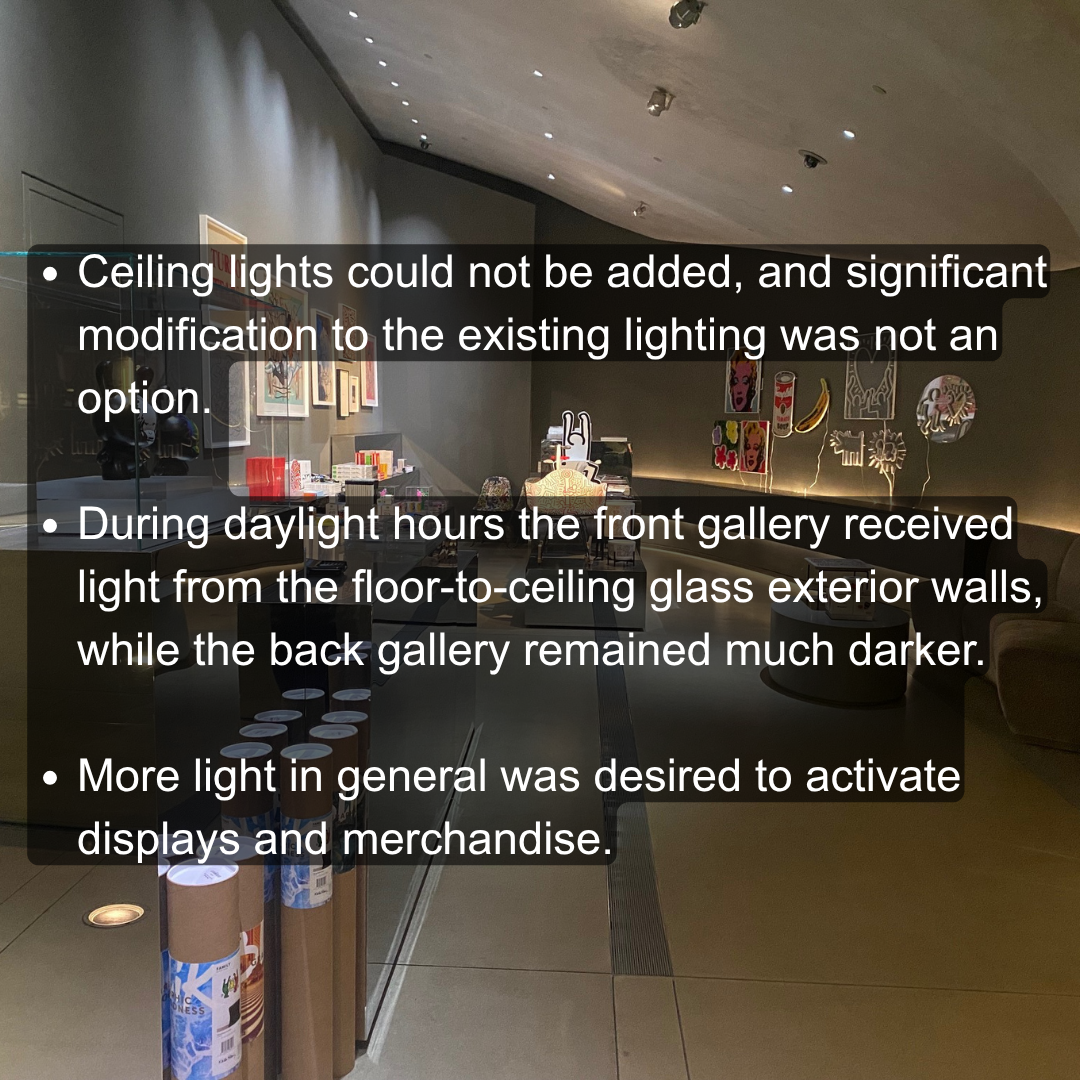
• Significant additions or modifications to the existing overhead lighting were not viable in this part of the building
• The front gallery receives light from the floor-to-ceiling glass walls at the east and south sides of the building. Aside from this only being a factor during daylight hours, the back gallery does not receive much of this light.
• More integrated lighting was desired to activate displays and merchandise.
• The existing serpentine shelving display in the lobby gallery was sufficiently lit, but needed to be refreshed and updated.
problem 2: DISPLAY & storage capacities
• Many of the original display fixtures were not designed to include hidden, internal storage space.
• Because there wasn’t enough quickly accessible and convenient storage on the shop floor, potential sales would often be lost as customers would grow impatient when sales associates would need to walk away to visit the stock room in search of specific sizes or variations of items of interest. The museum standard of exiting through the gift shop meant some of those impulse buyers would lose interest while waiting and head for the exit which was just a few steps away.
• The original fixtures didn’t include hangable display options for clothing items.
• The point of sale area did not offer space to display and influence the purchase of smaller items.
problem 3: need for additional display capabilities
• Many of the original display fixtures were not designed to include hidden, internal storage space.
• Because there wasn’t enough quickly accessible and convenient storage on the shop floor, potential sales would often be lost as customers would grow impatient when sales associates would need to walk away to visit the stock room in search of specific sizes or variations of items of interest. The museum standard of exiting through the gift shop meant some of those impulse buyers would lose interest while waiting and head for the exit which was just a few steps away.
• The original fixtures didn’t include hangable display options for clothing items.
• The point of sale area did not offer space to display and influence the purchase of smaller items.
problem 4: issues with durability and maintenance
• Many of the original display fixtures were not designed to include hidden, internal storage space.
• Because there wasn’t enough quickly accessible and convenient storage on the shop floor, potential sales would often be lost as customers would grow impatient when sales associates would need to walk away to visit the stock room in search of specific sizes or variations of items of interest. The museum standard of exiting through the gift shop meant some of those impulse buyers would lose interest while waiting and head for the exit which was just a few steps away.
• The original fixtures didn’t include hangable display options for clothing items.
• The point of sale area didn’t offer space to display and influence the purchase of smaller items.
back gallery
original fixtures and layout
problem 1: lighting
the solutions proposed and implemented
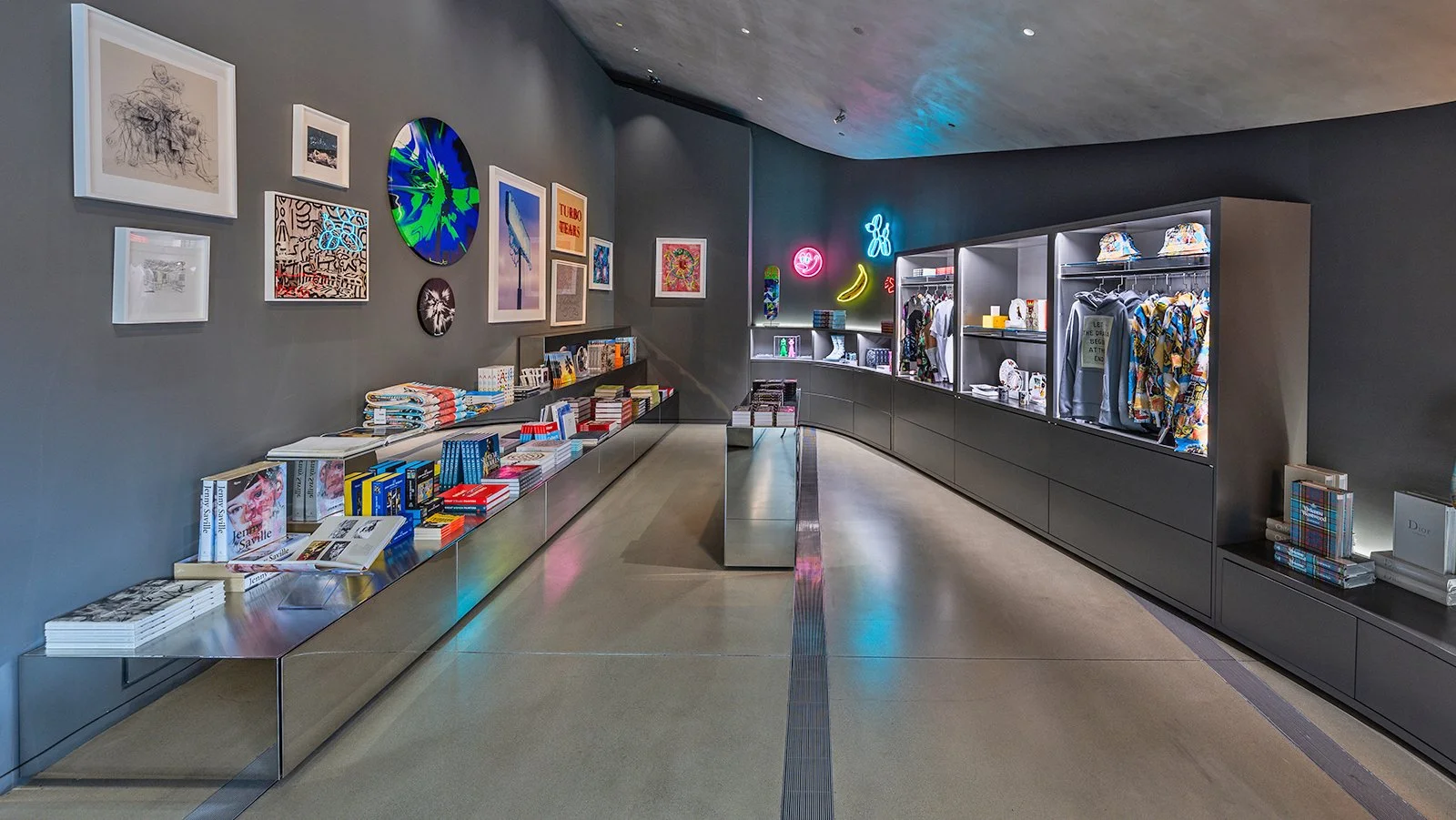
Starting with the back gallery, we designed a new hybrid display system for the 35-foot curved wall. This system featured ample integrated lighting, maximum storage and a proprietary, adjustable system of glass shelves with hanger mechanisms for clothing. These details enabled the flexibility needed for the shop to accommodate necessary display changes in unison with the constant rotation of special museum exhibitions.
Keeping with The Broad Museum’s aesthetic and acumen, the challenge here was for this fixture to provide versatile flexibility with display configurations, while communicating a strong visual sense of uniformity, permanence and intent.
-
![]()
NEW CURVED WALL FIXTURE
It all begins with an idea. Maybe you want to launch a business. Maybe you want to turn a hobby into something more. trying to get an idea of how much text I can put in here. trying to get an idea of how much text I can put in here. trying to get an idea of how much text I can put in here. trying to get an idea of how much text I can put in here. trying to get an idea of how much text I can put in here. trying to get an idea of how much text I can put in here. trying to get an idea of how much text I can put in here. trying to get an idea of how much text I can put in here. trying to get an idea of how much text I can put in here. trying to get an idea of how much text I can put in here. trying to get an idea of how much text I can put in here.
-
![]()
CASE STUDY PROBLEM 1: LIGHTING
It all begins with an idea. Maybe you want to launch a business. Maybe you want to turn a hobby into something more.
-
![]()
CASE STUDY PROBLEM 1: LIGHTING
It all begins with an idea. Maybe you want to launch a business. Maybe you want to turn a hobby into something more.
-
![]()
CASE STUDY PROBLEM 1: LIGHTING
It all begins with an idea. Maybe you want to launch a business. Maybe you want to turn a hobby into something more.